Context
POSUTI helps people work with recorded content: a full interview transcript, lecture notes, or meeting outcomes. I founded the product and wrote the entire service, from the user interface to backend processing and Python speech recognition. The service is running in production.
The challenge: make recordings useful
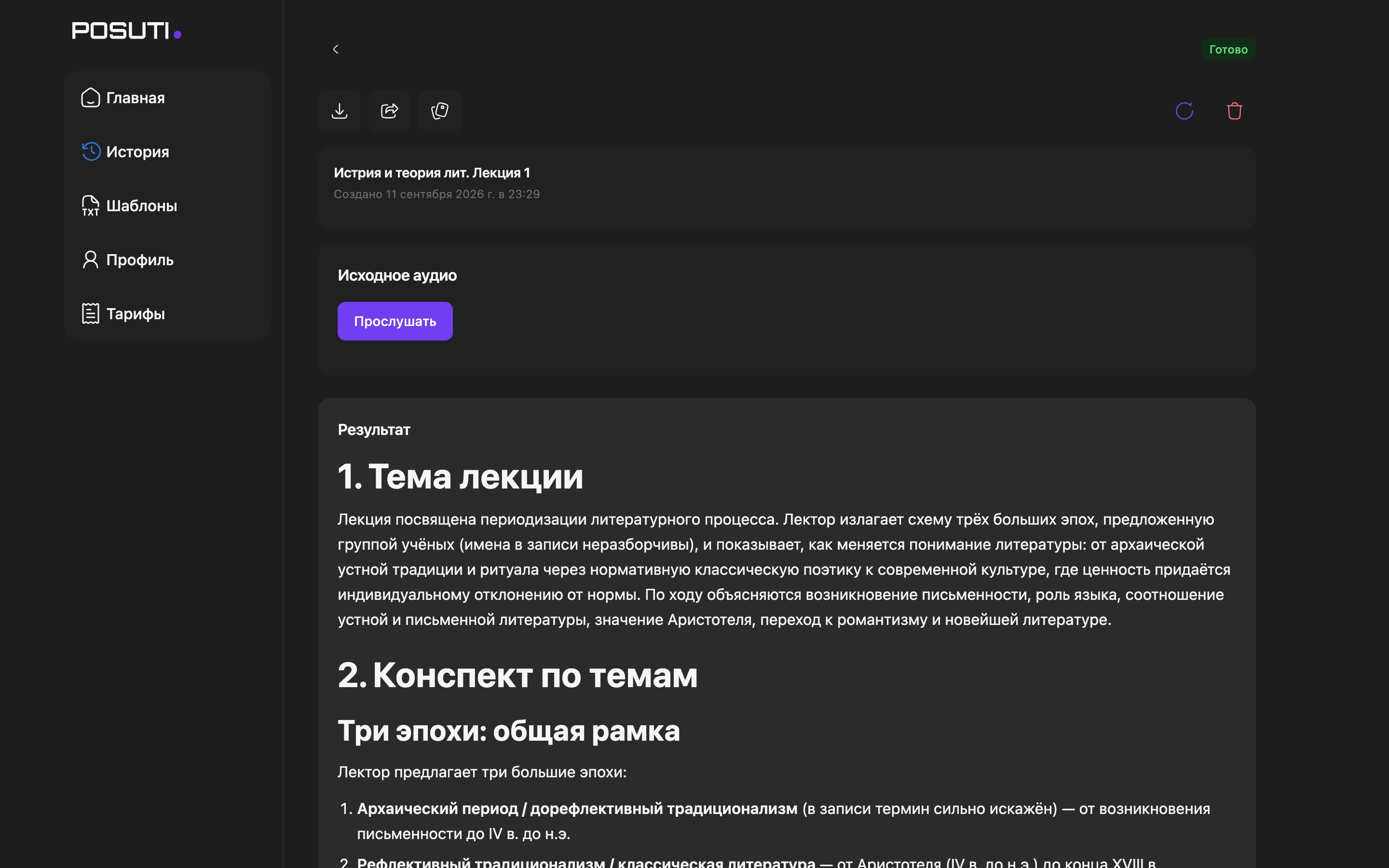
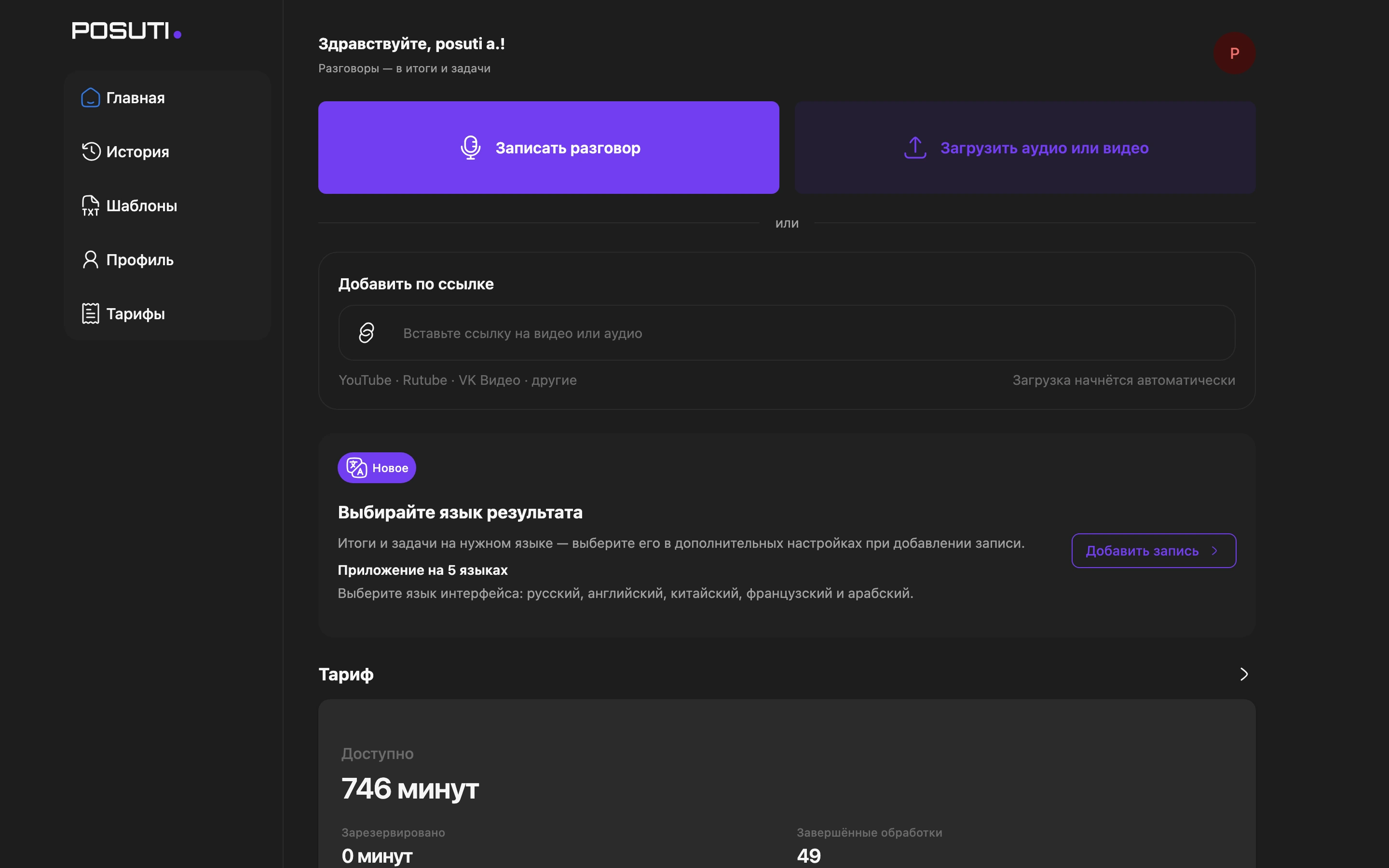
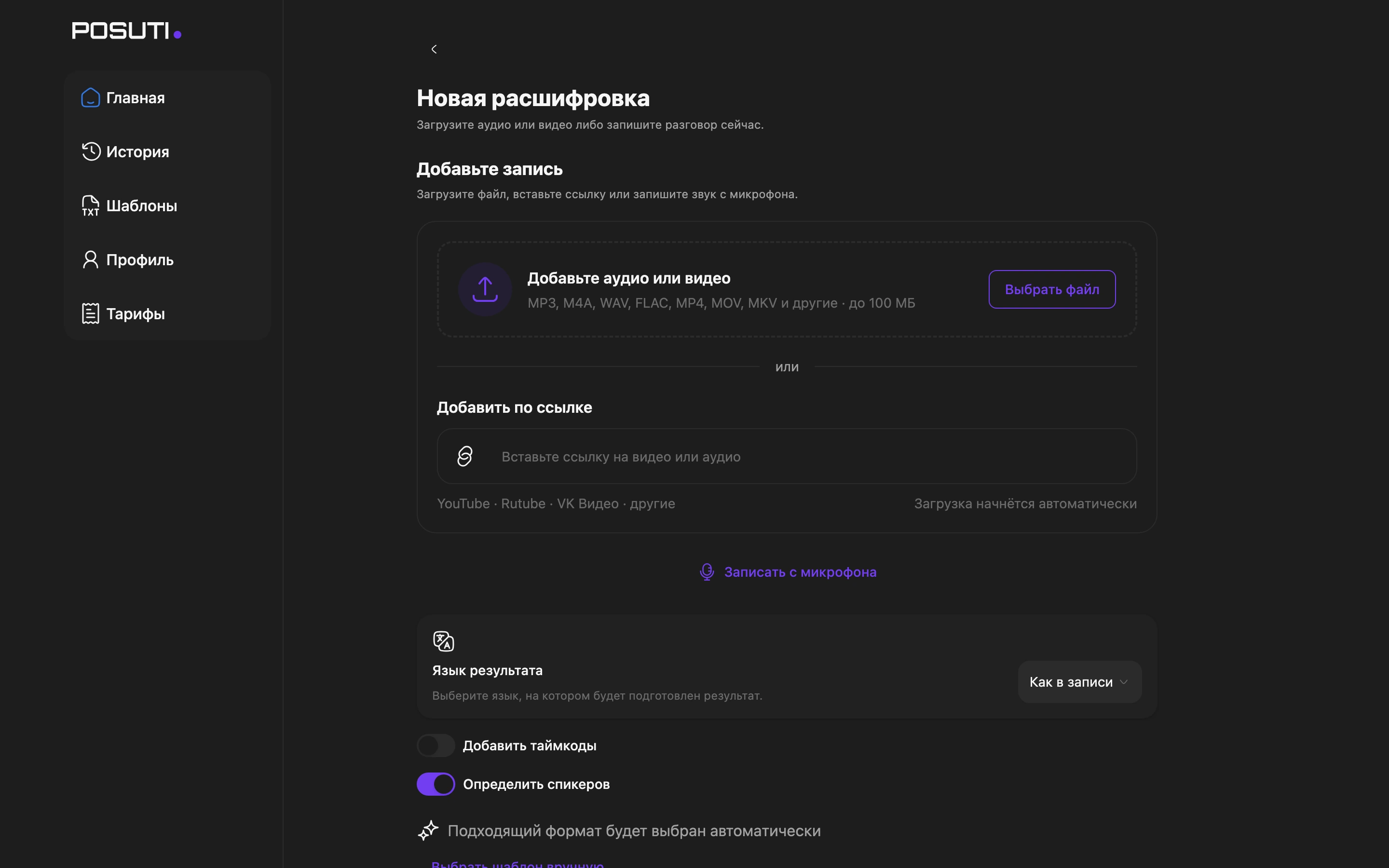
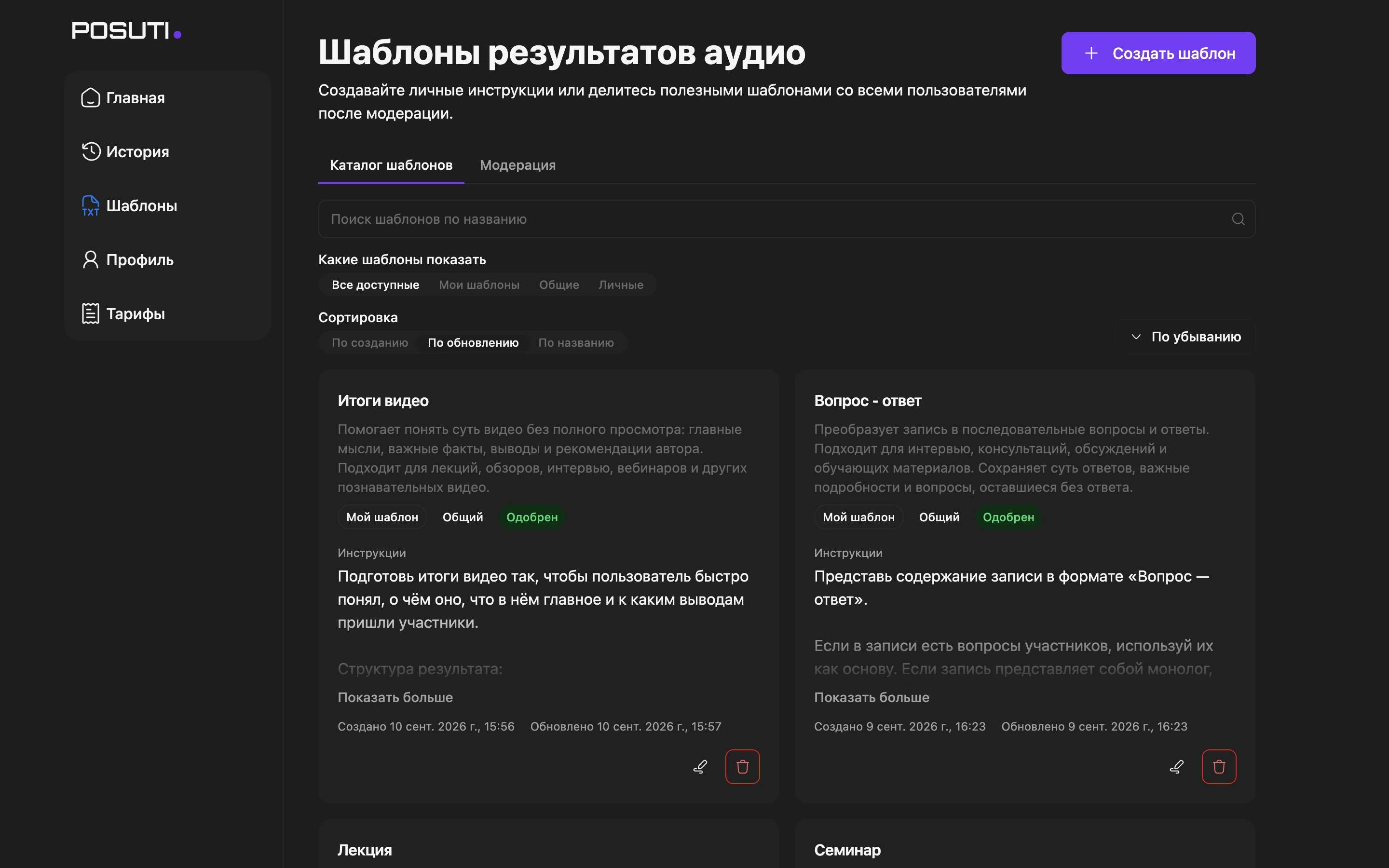
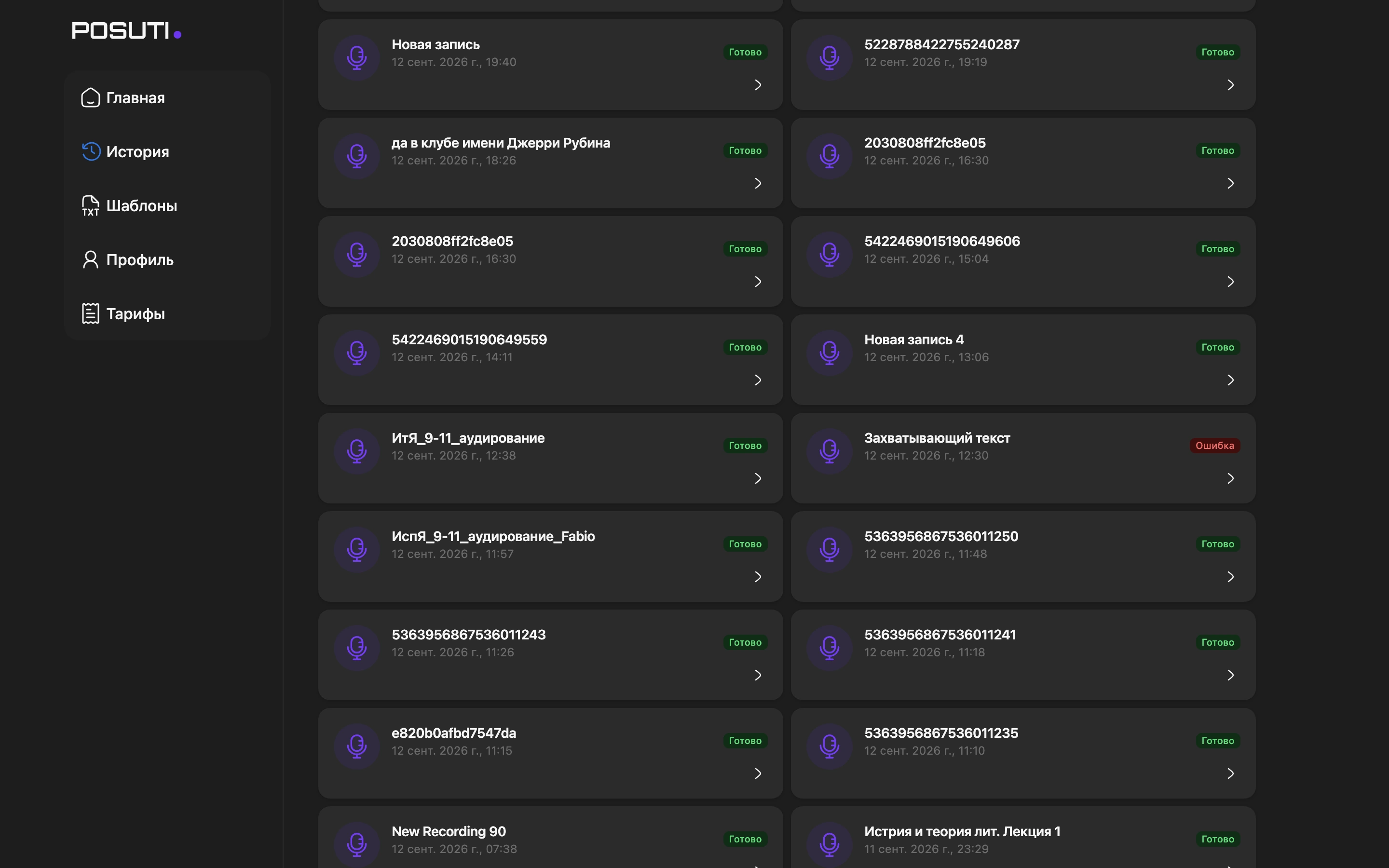
Transcription is the first step. Working with a lecture, interview, or meeting calls for a specific output: notes, a full transcript, decisions, or next steps. In POSUTI, users upload a recording, choose a template, and receive a structured document.
My contribution: the complete service
I independently developed the React and TypeScript frontend, the NestJS backend, and the Python speech recognition service. The application provides recording uploads, processing history, templates, and result exports.
Alongside audio processing, the service includes accounts, plans, processing-time allowances, and payments. These form a single product experience, taking the user from uploading a recording to receiving the output.
Architecture: speech recognition and text processing
Speech recognition runs in a separate Python service built with FastAPI. It uses local T-one and faster-whisper models, selected according to the recording language. FFmpeg prepares audio for processing.
Long-running processing uses RabbitMQ, while the backend persists jobs and manages retries. Transcription and output formatting are separate: a saved transcript can be processed with another template without running speech recognition again.
The outcome: a live product
The service is live in production. Users receive both a transcript and material shaped by their chosen template, from lecture notes to meeting outcomes. Text and subtitle exports are available.
Behind the outcomes
POSUTI brings together my entrepreneurial and engineering experience: I founded the product, built the complete service independently, and brought it into production.